Farming

Deepdale Farm is a diversified farm, producing malting barley, milling wheat, potatoes, carrots, sugarbeet and various rotation crops

Deepdale
Backpackers Hostel
Deepdale Granary Group Hostel Deepdale
Camping
Deepdale
Tipis
Visitor Information Centre Events
and Courses
Activities and Attractions Walking
and Cycling
About Deepdale How to Find Us

 
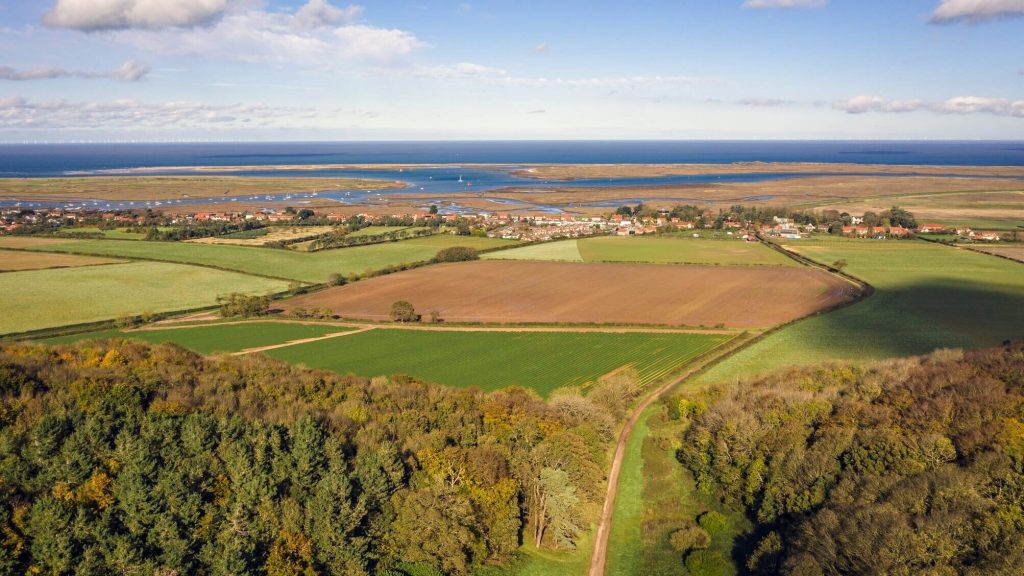
The main farm is centred at Burnham Deepdale with the fields both sides of the main coast road.  To the north is reclaimed marshland.

All the land can be divided into three sections.

The reclaimed marsh land was drained in 1822, when they built the seawall, which is now the Norfolk Coast Path (There is a good view from the top of the bank down over the reclaimed marsh land and across Brancaster Staithe harbour and Scolt Head Island).  For harvest 2004 there is one small field of winter beans. The rest of the fields are sown to Malacca winter wheat. This normally produces a good quality milling wheat which is sold to millers to make bread. All the fields have round the outside at least a 10 metre wide strip of grass which is classed as setaside and kept for wildlife. The obvious and noticeable species are the amazing number of swans.

Reclaimed Marsh Land - Heavy Clay

The reclaimed marsh land was drained in 1822, when they built the seawall, which is now the Norfolk Coast Path (There is a good view from the top of the bank down over the reclaimed marsh land and across Brancaster Staithe harbour and Scolt Head Island).  For harvest 2004 there is one small field of winter beans. The rest of the fields are sown to Malacca winter wheat. This normally produces a good quality milling wheat which is sold to millers to make bread. All the fields have round the outside at least a 10 metre wide strip of grass which is classed as setaside and kept for wildlife. The obvious and noticeable species are the amazing number of swans.

      We built a wind pump in 2000, replacing a noisy and smelly diesel pump that required twice daily maintenance.  The wind pump, though expensive to install, only requires a grease about once a year and incurs no fuel cost.  We are amazed how little wind is required to make it turn.  The objective is to reduce the water level in the general drainage ditches by pumping it into the slightly (1metre) higher sea pound.  This higher water level forces the sea sluice open sooner when the tide goes out.

Coast Road Section - Loamy Sand

The strip of land each side of the coast road is good quality loamy sand.  Traditionally this area was used to grow winter barley and sugar beet.  The area of barley has had to be reduced, as it is no longer profitable, even taking into account the subsidy from the EU.  With the availability of naturally rising springs of good quality water just over the road on the reclaimed marsh, this area is excellent for growing carrots and potatoes, with wheat, barley and sugar beet as break crops.  The whole farm is served by an extensive system of undergound water pipes for the irrigation that we have installed over the last 20 years.

The strip of land each side of the coast road is good quality loamy sand.  Traditionally this area was used to grow winter barley and sugar beet.  The area of barley has had to be reduced, as it is no longer profitable, even taking into account the subsidy from the EU.  With the availability of naturally rising springs of good quality water just over the road on the reclaimed marsh, this area is excellent for growing carrots and potatoes, with wheat, barley and sugar beet as break crops.  The whole farm is served by an extensive system of undergound water pipes for the irrigation that we have installed over the last 20 years.

The strip of land each side of the coast road is good quality loamy sand.  Traditionally this area was used to grow winter barley and sugar beet.  The area of barley has had to be reduced, as it is no longer profitable, even taking into account the subsidy from the EU.  With the availability of naturally rising springs of good quality water just over the road on the reclaimed marsh, this area is excellent for growing carrots and potatoes, with wheat, barley and sugar beet as break crops.  The whole farm is served by an extensive system of undergound water pipes for the irrigation that we have installed over the last 20 years.

The reclaimed marsh land was drained in 1822, when they built the seawall, which is now the Norfolk Coast Path (There is a good view from the top of the bank down over the reclaimed marsh land and across Brancaster Staithe harbour and Scolt Head Island).  For harvest 2004 there is one small field of winter beans. The rest of the fields are sown to Malacca winter wheat. This normally produces a good quality milling wheat which is sold to millers to make bread. All the fields have round the outside at least a 10 metre wide strip of grass which is classed as setaside and kept for wildlife. The obvious and noticeable species are the amazing number of swans.Deepdale Hill - Sandy Gravel

Within one mile of the coast the land rises to 200 feet (60 metres) above sea level.  The upper land is excellent malting barley growing land, the traditional crop for this part of coastal Norfolk. This barley is beautiful bold and golden and goes to make beer. It is not advisable to grow more that about three barley crops in successive years, due to a build up of diseases and weeds. So we grow sugar beet as an alternative.  This goes to be sliced and processed to extract the sugar.   Due to the good sunny days we get here, our sugar beet contains about 19% sugar compared with the national average of about 16.5%.

We are now the third and fourth generation to run Deepdale Farm.  We have always had a very caring policy for the environment.  For example, we retain hedges and we estimate that we have over 20,000 metres (8 miles) of them.  One man spends at least 4 weeks a year looking after the hedges.  Where possible we try to leave cereal stubble fields undisturbed over the winter to provide feed for wild birds.  We do make use of the rules and split up the areas that we must not grow crops on (setaside).  In some of these areas we plant special wild bird mixes.  These contain such plants as sunflower and maize.

In 2002, we have entered the latest government scheme to extend the conservation value of these hedges by developing 6 metres of grass margin beside them.  In association with this scheme we have developing 2 circular walks round the farm, which give excellent views from Deepdale Hill looking down over the village and out to sea and Scolt Head Island.  Click here for more information

Alister Borthwick gives geography lectures to schools and interested groups.  If you are interested then please do contact us.
 

Frequently Asked Questions Customer Comments Awards & Press Properties to Let Useful Websites Job Opportunities Contact Us

Deepdale Farm - Diversified farm, producing malting barley, milling wheat, potatoes, carrots, sugarbeet and various rotation crops

Using Google we can offer basic translations of our website into:

Nederlands


Deutsch


Espanol


Francais

 
Ελληνικα


Italiano

 
Português
 
Русский
 
Polski
 
Svenska
 
Dansk
 
Norsk
 
日本語
 
한국
 
汉语
 
العربيه

Deepdale Farm   Burnham Deepdale   north Norfolk coast   PE31 8DD

Designed by Earthly Ideas

© Copyright Deepdale Farms - Thursday, 22 May 2008